
The Complete Guide to Brake Hoses: What They Are, How They Fail, and Why Upgrading Matters
When it comes to brake upgrades, pads and rotors get all the attention. But ask any experienced tuner or racer, and they'll tell you the brake hose is the critical link that can make or break your system's performance. This guide breaks down everything you need to know about this vital component, from its basic function to the clear advantages of aftermarket upgrades.
More Than Just a Tube: The Essential Role of the Brake Hose
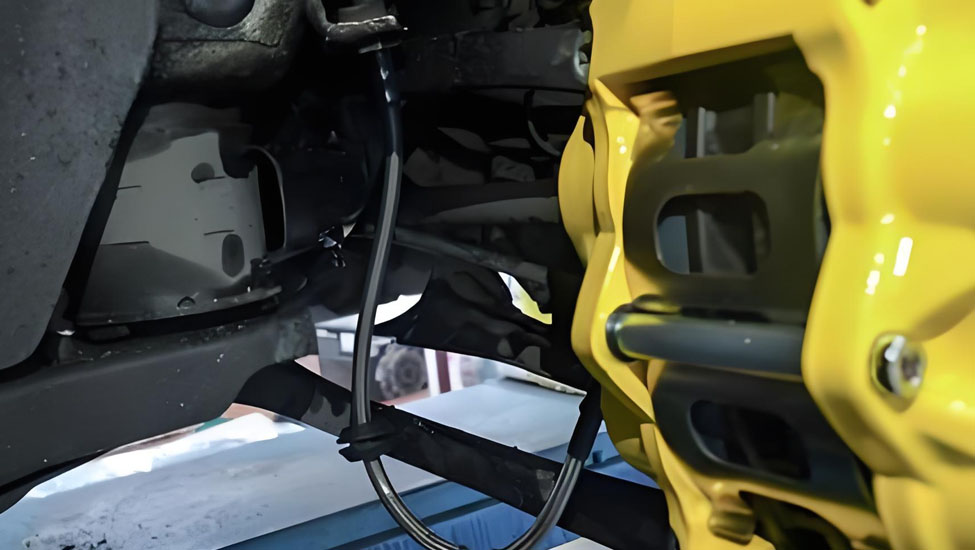
Your car's braking system is a sealed hydraulic circuit. When you press the pedal, you push brake fluid from the master cylinder, through a network of rigid steel lines, to the calipers at each wheel. The flexible brake hose is the final connection between the stationary chassis and the moving wheel assembly.
Its single job is simple but critical: transmit high-pressure fluid without losing any pressure or volume. Any weakness, expansion, or restriction in the hose directly steals braking power and control from the driver. In a performance or safety-critical situation, that's a failure you can't afford.
The Anatomy of Failure: How and Why Standard Hoses Fall Short
To understand the upgrade, you must first understand the limitations of the original equipment.
The Standard OEM Design: Reinforced Rubber
Most vehicles come with a hose made of EPDM synthetic rubber, reinforced with a textile mesh. It's designed for cost, NVH (noise, vibration, harshness), and a predictable lifespan under normal driving conditions.
- The Core Weakness: Expansion. Under the high pressure and heat generated by hard or repeated braking, the rubber walls expand outwards—like a balloon. This expansion consumes fluid volume that should be moving the caliper piston, resulting in a longer, "spongy" pedal travel.
- Material Degradation. Rubber is attacked by ozone, UV light, and heat. It can crack externally and swell or delaminate internally when contaminated by certain fluids or moisture. Over time, this creates a mushy feel and increases the risk of a sudden rupture.
The Upgrade Path: From Reinforced Polymers to Braided Armor
The aftermarket addresses OEM weaknesses with advanced materials and construction.
1. The Tough Workhorse: Reinforced Nylon
A significant step up from rubber, using a nylon core often wrapped in an aramid (Kevlar) fiber braid.
- Pros: Far superior abrasion and chemical resistance. Much lower expansion than rubber for a firmer pedal. Extremely durable for off-road and harsh environments. It's the ideal balance of performance and value, which is why our Nylon Brake Line and complete Nylon Brake Line Assembly kits are so popular for 4x4s and adventure touring.
- Cons: Can be stiffer than PTFE, requiring careful routing. Still has a measurable, though small, amount of expansion under extreme pressure.
2. The Motorsport Benchmark: PTFE (Teflon) with Stainless Steel Braid
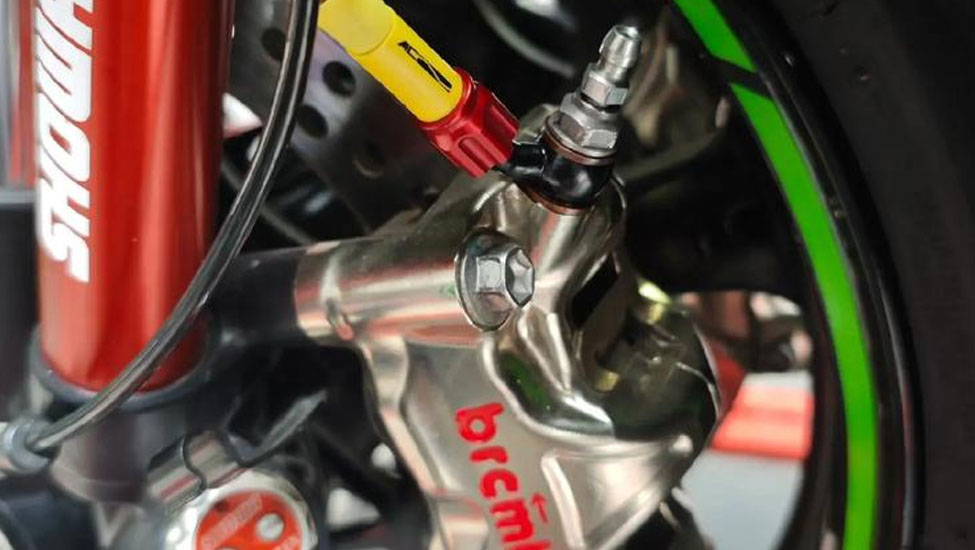
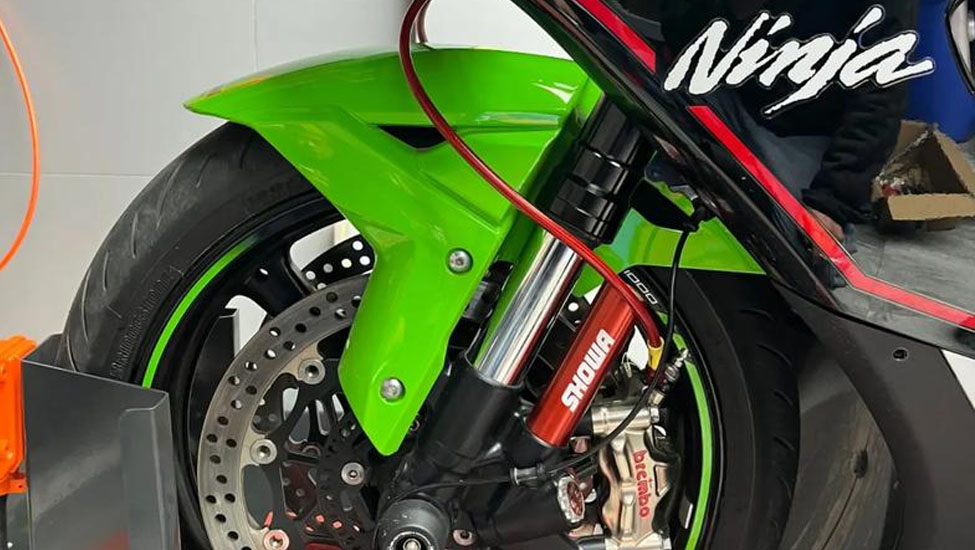
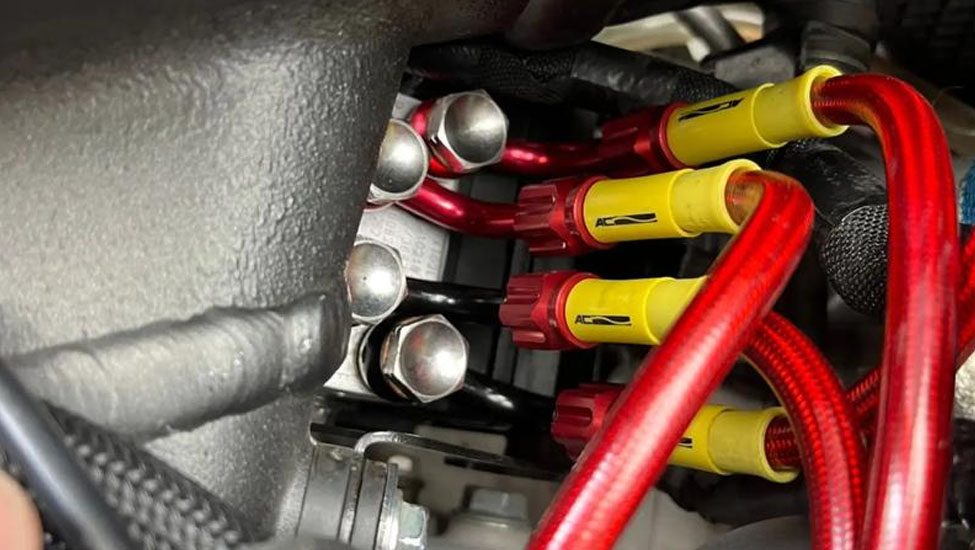
This is the pinnacle for performance and durability. A PTFE (Teflon) inner liner is sheathed in a tightly woven, protective stainless steel braided cover.
- Pros:
- Near-Zero Expansion: PTFE does not swell under pressure. This delivers an incredibly direct, immediate pedal feel—the "telepathic" feedback that racers demand.
- Extreme Temperature Tolerance: Operates flawlessly from -70°C to +260°C, far beyond what any engine bay or track brake system can produce.
- Total Chemical Inertness: Unaffected by all brake fluids and most chemicals. Prevents internal degradation and sludge.
- Armor-Like Protection: The stainless steel braided outer layer defends against abrasion, impact, and cuts from road debris.
Unsure Which Technology is Right for Your Build?
The choice between a robust Nylon Assembly and the ultimate performance of a PTFE Assembly depends on your budget, vehicle use, and performance goals. Describe your project to us—whether it's a weekend track car, a daily-driven tuner, or an overlanding SUV. Our technical team can cut through the hype and give you a straight, engineering-based recommendation. Contact us here with your project details.
Brake Hose Fundamentals FAQ
What is the primary function of a brake hose?
To act as a flexible, high-pressure conduit in the hydraulic brake system, connecting the fixed chassis lines to the moving brake calipers. It must transmit fluid pressure instantly and without loss to ensure precise braking control.
Is a braided stainless steel line just for looks?
Absolutely not. The stainless steel braid is functional armor. Its primary job is to contain and support the inner PTFE liner, preventing it from expanding under pressure and protecting it from external damage. The aesthetic is a bonus.
Can I feel the difference between rubber and braided lines on the street?
Yes, especially during moderate to hard braking. The pedal will feel firmer and more consistent. The difference is most pronounced during repeated stops, like in mountain driving or heavy traffic, where standard rubber hoses heat up and soften.