
Why Do High-Performance Motorcycles Use PTFE Inner Tubes in Brake Lines?
High-performance motorcycles place greater demands on the braking system than ordinary street motorcycles. During hard braking, hydraulic pressure rises quickly, brake components experience repeated thermal cycles, and the brake hose must maintain reliable fluid transmission under changing operating conditions.
This is one reason why PTFE brake lines are widely used in performance-oriented motorcycle brake systems. Instead of using a conventional elastomeric inner tube, a PTFE inner tube provides a different combination of chemical resistance, temperature stability, smooth internal surface and dimensional stability.
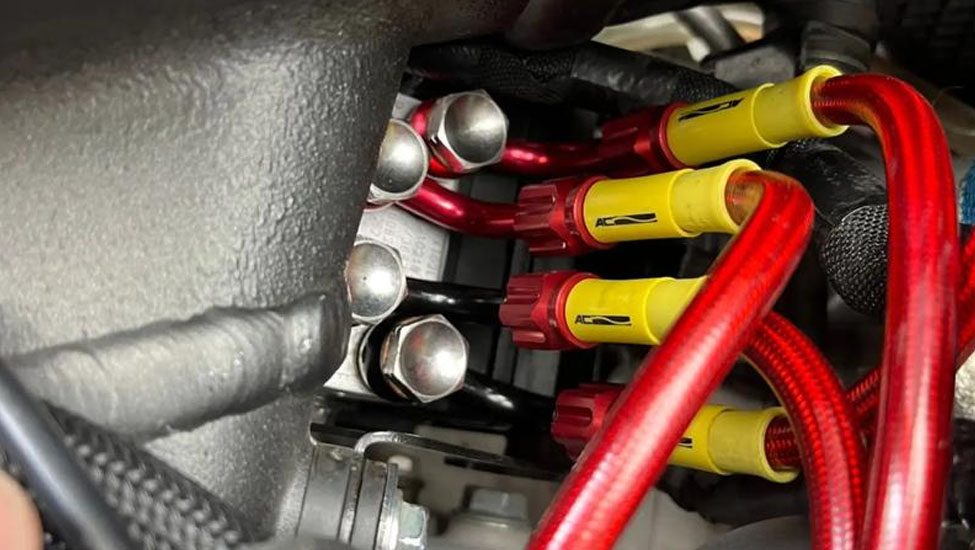
When combined with a suitable reinforcement layer, such as stainless steel wire braid, PTFE can form a high-performance brake hose construction designed for demanding motorcycle applications.
What Is a PTFE Inner Tube?
PTFE stands for polytetrafluoroethylene, a fluoropolymer known for its chemical resistance, thermal stability and low-friction surface characteristics.
In a PTFE brake hose, the PTFE tube is the inner layer that comes directly into contact with the brake fluid. The outer reinforcement and protective covering then provide the mechanical strength and environmental protection required by the complete hose assembly.
Typical PTFE Brake Line Construction
- PTFE inner tube for brake fluid transmission
- Stainless steel or other suitable reinforcement layer
- Protective outer coating or covering
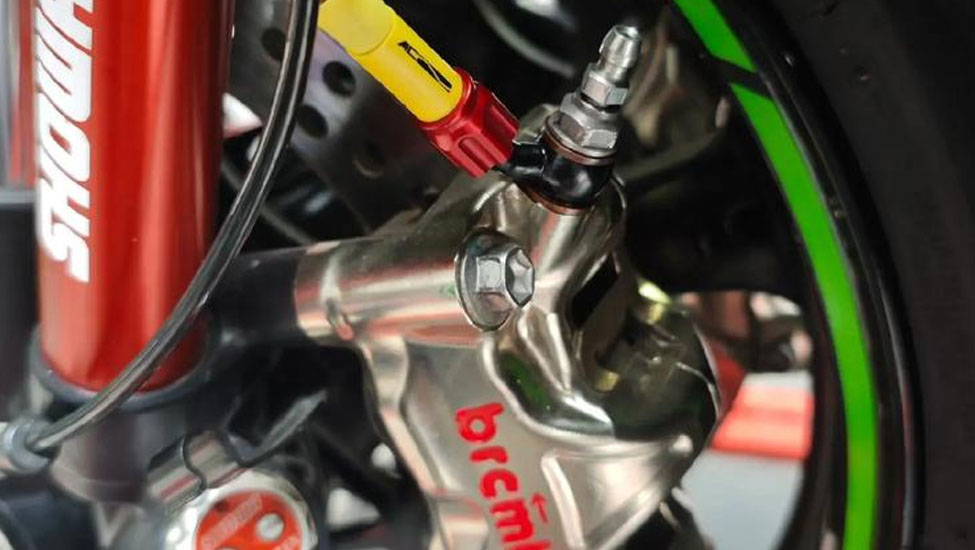
- Brake-specific fittings and crimped connections
The complete construction is important. PTFE should not be evaluated independently from the reinforcement, fittings, hose dimensions and application requirements.
Why Is PTFE Used in High-Performance Motorcycle Brake Lines?
1. Excellent Chemical Resistance
The inner tube is continuously exposed to brake fluid, making material compatibility an important consideration.
PTFE is known for its broad chemical resistance and is widely used in hydraulic and fluid-handling applications. This property makes PTFE attractive for brake hose applications where long-term compatibility with the specified brake fluid is required.
For performance motorcycle applications, can use PTFE as the fluid-contact layer while a suitable reinforcement provides the required mechanical performance.
2. Good Temperature Stability
Motorcycle braking systems can experience significant temperature changes, especially during repeated hard braking, track riding, mountain riding and other demanding conditions.
PTFE has a wide temperature capability compared with many conventional hose liner materials. However, the actual operating temperature of a brake hose assembly depends on the complete construction, pressure, fittings, external covering and installation environment.
This makes PTFE useful when designing brake lines for applications where thermal stability is an important material-selection factor.
3. Low-Friction Smooth Internal Surface
A PTFE inner tube provides a smooth internal surface. The low-friction characteristics of PTFE are one reason the material is widely used in fluid-handling applications.
In a brake system, the primary purpose of the hose is reliable hydraulic fluid transmission. The internal surface should therefore remain compatible with the brake fluid and maintain the intended hydraulic path during repeated pressure cycles.
4. Controlled Hose Expansion With Proper Reinforcement
One of the most important reasons for combining PTFE with reinforcement is to control dimensional changes under hydraulic pressure.
A brake hose does not generate braking force by itself. The master cylinder generates hydraulic pressure, which is transmitted through the brake fluid to the caliper.
When hose expansion is controlled by an appropriate hose construction, less hydraulic system compliance can contribute to a more consistent lever response.
This is one reason Stainlesssteelbraided Hose and Braided Brake lines are frequently associated with performance motorcycle brake upgrades.
Why Combine PTFE With Stainless Steel Braiding?
PTFE and stainless steel perform different functions inside a high-performance brake hose.
PTFE Inner Tube
The PTFE inner tube is primarily responsible for carrying the brake fluid and providing the fluid-contact surface.
Stainless Steel Braid
The stainless steel braid acts as a reinforcement layer around the inner tube. Its function is to provide mechanical support and help control hose expansion under hydraulic pressure.
Outer Protective Layer
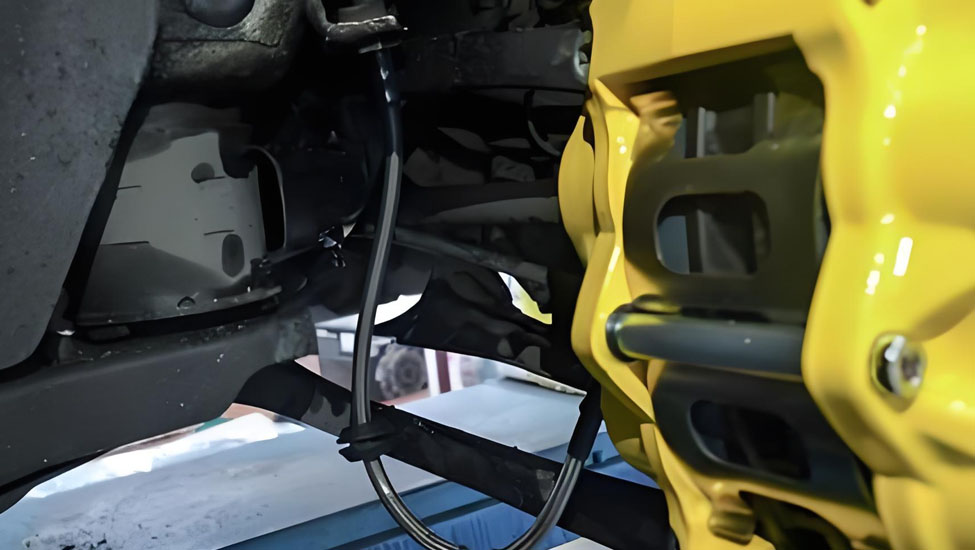
An outer coating or protective covering can help protect the braid and hose assembly against abrasion, road debris and environmental exposure.
The three layers therefore work as a system rather than as independent components.
PTFE Brake Line vs Conventional Rubber Brake Line
| Feature | PTFE Brake Line | Rubber Brake Line |
|---|---|---|
| Inner Tube | PTFE | Rubber/elastomer |
| Chemical Resistance | High, depending on fluid and formulation | Depends on rubber compound |
| Temperature Stability | High material capability | Depends on rubber formulation |
| Internal Surface | Smooth PTFE surface | Elastomeric surface |
| Reinforcement Options | Stainless steel braid or other suitable reinforcement | Textile or other reinforcement depending on design |
| Typical Application | Performance, modified and demanding hydraulic applications | OEM-style and general replacement applications |
For conventional replacement applications, can remain a practical solution when the original vehicle configuration and hose requirements are maintained.
Why PTFE Is Popular for Modified Motorcycle Brake Lines
Modified motorcycles often have different requirements from the original factory configuration.
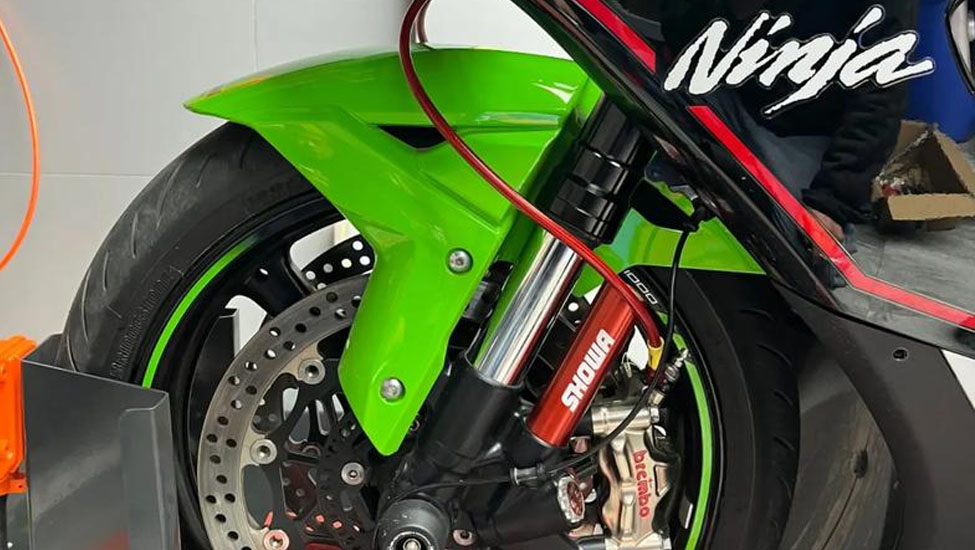
Changing the master cylinder, brake caliper, handlebar, front fork or brake system layout can change the required hose length, fitting angle and routing path.
Custom Length
A custom-length hose can be produced according to the actual motorcycle configuration. This can help avoid excessive hose loops or unnecessary tension during installation.
Custom Fitting Orientation
The fitting angle is particularly important on motorcycle brake systems. Correct fitting orientation can reduce the need to twist the hose during installation.
Application-Specific Hose Construction
Different motorcycle applications may require different hose constructions. A PTFE-based hose can be selected when chemical resistance, temperature stability and controlled hydraulic characteristics are important design considerations.
A complete can combine the PTFE hose, reinforcement and application-specific fittings into one finished assembly.
PTFE Brake Lines for High-Performance Motorcycle Applications
Track and Racing Motorcycles
Track motorcycles can experience repeated high-load braking events. Brake system consistency becomes particularly important when the rider repeatedly applies high braking force.
A properly specified PTFE and reinforced brake hose construction can provide controlled hose expansion and stable material characteristics for demanding applications.
Sport Motorcycles
Sport motorcycles often use upgraded brake components, making hose length and fitting compatibility important during modification.
For these applications, and PTFE-based constructions can be evaluated according to the required temperature range, pressure rating, flexibility and application environment.
Custom and Modified Motorcycles
Custom motorcycles may require non-standard hose lengths, fitting combinations and routing configurations.
A customized Motorcycle Brake Lines solution allows the hose assembly to be designed around the motorcycle rather than forcing a standard hose into an unsuitable routing position.
PTFE Brake Line Assembly: Why the Complete Assembly Matters
Choosing a PTFE tube alone is not enough to determine the performance of a brake hose.
Hose Construction
The inner diameter, wall thickness, PTFE formulation and reinforcement structure all affect the final characteristics of the hose.
Reinforcement
The reinforcement layer must be compatible with the pressure and mechanical requirements of the application.
Fittings
The fittings are critical connection points. Thread specification, fitting angle, banjo orientation and crimping quality all need to match the motorcycle brake system.
Outer Protection
For motorcycles used in environments with road debris, dust, moisture or frequent contact with other components, an appropriate outer protective layer can provide additional abrasion protection.
For this reason, or PTFE assembly should be evaluated as a complete product rather than based only on the liner material.
PTFE Brake Line Buying Checklist for B2B Buyers
For importers, motorcycle parts distributors, brake system workshops and OEM customers, the following specifications should be confirmed before ordering PTFE brake lines.
- PTFE inner tube material
- Hose inner diameter and outer diameter
- Reinforcement material and braid structure
- Working pressure and burst pressure
- Operating temperature range
- Brake fluid compatibility
- Hose length
- Fitting type
- Thread specification
- Fitting angle
- Banjo orientation
- Outer protective coating
- Required quantity and packaging
How PTFE Brake Lines Fit Into a Motorcycle Brake Upgrade
A brake hose upgrade should be considered as part of the complete braking system rather than as an isolated component.
The master cylinder, brake caliper, brake pads, brake fluid, hose construction and installation all influence the final braking characteristics.
Upgrading to a PTFE-based reinforced brake line does not automatically increase the braking force of a motorcycle. Instead, the purpose is to provide a hose construction with suitable material compatibility, pressure characteristics and mechanical reinforcement for the intended application.
PTFE, Nylon and Rubber: Choosing the Right Brake Hose Material
There is no single hose material that is correct for every motorcycle.
Choose PTFE When
- High chemical resistance is important.
- Temperature stability is an important design requirement.
- A reinforced performance-oriented construction is required.
- The application requires controlled hose expansion.
- The motorcycle is being modified for demanding use.
Choose Nylon When
- Weight and flexibility are important considerations.
- The application is suitable for the specified nylon construction.
- A customized nylon hose solution is required.
Choose Rubber When
- The application follows an OEM-style configuration.
- Flexibility is a primary requirement.
- A conventional replacement hose is needed.
Conclusion: Why High-Performance Motorcycles Use PTFE Brake Lines
PTFE is used as the inner tube in many performance-oriented motorcycle brake lines because it offers a combination of chemical resistance, temperature stability, smooth internal surface characteristics and dimensional stability.
When PTFE is combined with suitable stainless steel or other reinforcement, the resulting brake hose can provide a controlled and durable construction for demanding motorcycle applications.
For motorcycle manufacturers, distributors, modification shops and brake component importers, the most important point is to evaluate the complete brake hose assembly: PTFE liner, reinforcement, protective layer, fittings, hose length and application-specific specifications should all work together.
A properly specified Teflon Brake Line, PTFE Brake Line Assembly or Braided Brake lines solution can therefore be a practical option for high-performance and modified motorcycle brake systems.