
Why Is a Brake Caliper Not Releasing? Causes, Diagnosis and Repair Considerations
A brake caliper that continues to apply force after the driver releases the brake pedal can cause excessive brake temperature, uneven pad wear and reduced vehicle efficiency. The fault may be mechanical or hydraulic, so replacing the caliper or flexible hose without a structured diagnosis can leave the underlying problem unresolved.
Common Signs of a Brake That Will Not Release
Excessive Heat at One Wheel
A wheel that becomes unusually hot after normal use may indicate persistent brake drag. Other possible causes include a sticking caliper piston, seized guide pins or a parking-brake mechanism that does not return correctly.
Uneven Pad Wear
Uneven wear between the inner and outer pads, or between the left and right wheels, can indicate restricted caliper movement or an imbalance in brake operation. The pad pattern should be assessed alongside the rotor, caliper and hydraulic components.
Vehicle Pulling or Reduced Coasting
A dragging brake may create a pulling sensation, increased resistance or an unusual odor. These symptoms are not specific to one component and should be investigated before the vehicle is returned to service.
Mechanical Causes to Check First
Sticking Caliper Guide Pins
Corrosion, damaged boots, contamination or unsuitable lubrication can prevent the caliper from moving as designed. Inspect the guide pins and related components using the vehicle manufacturer's service procedure.
Caliper Piston Problems
A piston may fail to retract normally because of corrosion, contamination, seal deterioration or mechanical damage. Follow the prescribed inspection and repair procedure rather than forcing the piston back into position.
Parking-Brake Mechanism Faults
On vehicles where the parking brake operates through the rear caliper, a seized cable, actuator or internal mechanism can leave the brake partially applied. The design differs by vehicle, so consult the appropriate service information.
Hydraulic Causes of Brake Drag
Restricted Fluid Return
In some cases, hydraulic pressure is applied to the caliper but does not release normally. A damaged flexible hose can act as a restriction, but the diagnosis must also consider the master cylinder, hydraulic control components and other parts of the circuit.
Master Cylinder or Compensation Port Problems
A fault that prevents pressure from being released correctly can cause one or more brakes to remain applied. Diagnosis depends on the vehicle's hydraulic layout and must follow the manufacturer's procedure.
Contamination and Incorrect Service Procedures
Incompatible fluid, contamination or incorrect assembly can affect hydraulic components and seals. Use only the specified brake fluid and approved service procedures.
How a Technician Can Separate Mechanical and Hydraulic Faults
Step 1: Stop if the Brake Is Overheating
If there is smoke, a burning smell, severe drag or suspected hydraulic failure, stop driving and arrange professional inspection or vehicle recovery. Brake components can remain extremely hot after use.
Step 2: Inspect the Caliper and Wheel Assembly
Check pad wear, guide-pin movement, piston condition, rotor condition and parking-brake operation as applicable. Use the vehicle-specific diagnostic sequence.
Step 3: Inspect the Flexible Hose and Connections
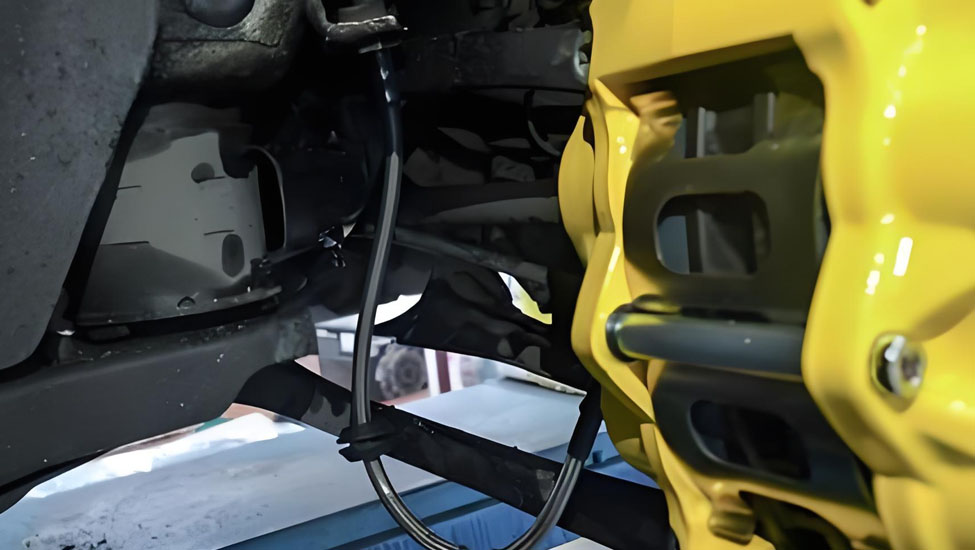
Look for swelling, kinks, abrasion, leaks, twisting or damage near the fittings. Internal damage may not be visible externally, so a normal appearance does not rule out a hydraulic restriction.
Step 4: Perform the Required Hydraulic Tests
A qualified technician should use the appropriate equipment and service procedure to determine whether pressure is being retained and where the fault originates. Opening a hydraulic connection or releasing trapped pressure must not be attempted without the correct procedure and precautions.
Step 5: Repair and Verify
Replace defective components with application-compatible parts, bleed the system when required, inspect for leakage and complete all prescribed functional checks before returning the vehicle to service.
When Should a Brake Hose Be Replaced?
A hose should be replaced when it is leaking, visibly damaged, confirmed to have an internal restriction or otherwise fails the applicable inspection criteria. Select a replacement assembly according to the original specification and intended application.
For suitable applications requiring a complete PTFE-based line, review our PTFE Brake Line Assembly products. Conventional replacement projects may also require an application-specific Rubber Brake Hose Assembly.
Frequently Asked Questions
Can a bad brake hose cause a caliper to remain applied?
Yes. An internally damaged hose can restrict pressure release in some failure modes. However, a sticking caliper, master cylinder fault or another hydraulic problem can produce similar symptoms.
Will bleeding the brake system fix a dragging caliper?
Not necessarily. Bleeding may remove trapped air, but it does not repair a seized piston, damaged hose or other mechanical restriction. The root cause must be identified.
Is it safe to continue driving with a dragging brake?
No. Persistent brake drag can cause overheating and impair braking performance. Stop driving and arrange a qualified inspection.
Brake Hose Replacement and Technical Support
Correct diagnosis helps workshops avoid unnecessary replacement and select a component that matches the actual failure and vehicle requirements.