
Brake Hose Leakage, Bulging, Cracking and Collapse: Causes and Solutions
Brake hose problems do not always appear suddenly. In many cases, the hose gives visible or operational warning signs before a serious failure occurs. Leakage, bulging, cracking, abrasion and internal collapse are among the problems most commonly encountered during brake system inspection.
Understanding the difference between these symptoms is useful for motorcycle owners, repair shops, vehicle modification businesses and brake parts buyers.
Brake Hose Leakage
Where Does Brake Fluid Leakage Usually Occur?
Leakage can occur at the hose surface, fitting connection, banjo area or crimped section. The first step is to identify the exact location instead of assuming that the hose itself is defective.
Common Causes of Leakage
- Damaged hose surface
- Loose or incorrectly installed connection
- Damaged sealing washer
- Incorrect fitting specification
- Damaged fitting
- Improper crimping
- Material deterioration
A brake fluid leak should never be treated as a minor cosmetic issue. The braking system should be inspected and repaired before normal vehicle operation.
Brake Hose Bulging
Bulging occurs when part of the hose develops visible swelling. It may be related to aging, damage to reinforcement or changes in the hose structure.
What Causes Brake Hose Bulging?
Brake hoses experience repeated pressure cycles. Over time, aging materials, high temperatures, mechanical damage and incorrect installation can affect the hose structure.
Warning Signs
- Visible swelling
- Soft or abnormal hose sections
- Changes in hose shape under pressure
- Surface deterioration
- Unusual brake system behavior
If a hose shows obvious structural damage, replacement with a correctly specified hose is normally the safer approach than attempting to repair the damaged section.
Brake Hose Cracking
Why Do Brake Hoses Crack?
Flexible hoses continuously bend and move during vehicle operation. Heat, environmental exposure, aging and mechanical stress can accelerate surface deterioration.
Where Should You Inspect First?
- Areas close to fittings
- Sharp bends
- Clamped sections
- Areas exposed to heat
- Points where the hose contacts another component
Fine cracks can become more obvious when the hose is flexed, but inspection should be performed carefully and according to appropriate service procedures.
Internal Brake Hose Collapse
Internal collapse is more difficult to identify because the external surface may appear normal.
What Happens When a Brake Hose Collapses Internally?
If the internal layer becomes damaged or separates, the passage for brake fluid can become restricted. In some cases, this may interfere with normal brake pressure release and cause abnormal brake behavior.
Because internal damage cannot always be confirmed through visual inspection, unusual brake symptoms should be evaluated by a qualified technician.
Brake Hose Abrasion
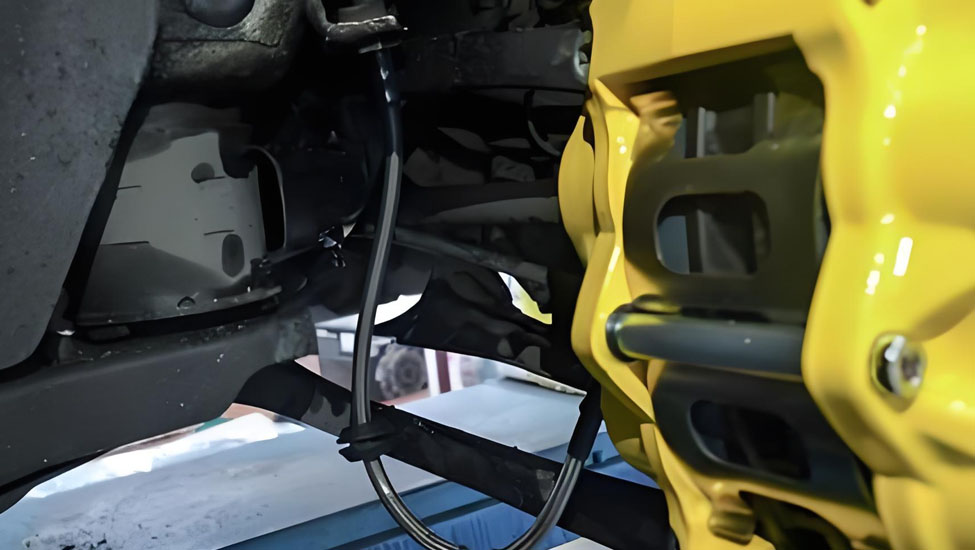
Abrasion is often caused by incorrect routing. A hose may gradually rub against a wheel, frame, suspension component or bracket.
How to Prevent Abrasion
- Maintain adequate clearance from moving components
- Avoid sharp edges
- Use suitable hose clamps or guides
- Check full steering movement on motorcycles and scooters
- Check suspension movement on cars and SUVs
Brake Hose Fitting Problems
Brake hose performance depends not only on the flexible tube but also on the fittings and connection method.
Common Fitting Problems
- Incorrect thread size
- Incorrect thread pitch
- Wrong fitting angle
- Incorrect banjo specification
- Improper fitting orientation
- Damaged sealing components
- Incorrect crimping
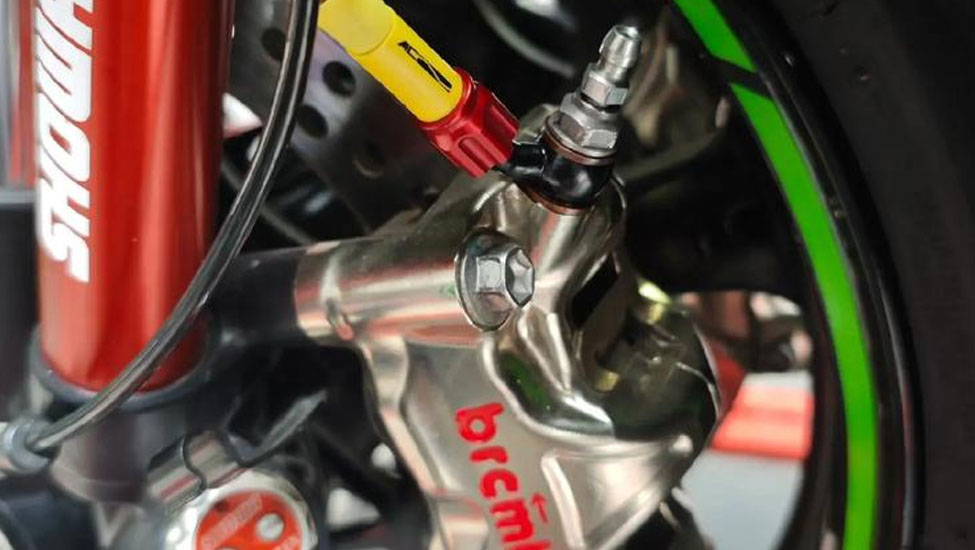
For custom brake hose production, the fitting should be treated as part of the complete assembly rather than as a separate accessory.
When Should You Replace a Brake Hose?
Replace or Inspect Immediately When You Find:
- Visible cracks
- Obvious bulging
- Brake fluid leakage
- Severe abrasion
- Damaged fittings
- Suspected internal collapse
- Significant deterioration around crimped areas
There is no universal replacement mileage for all brake hoses. The decision should consider the hose condition, vehicle usage, material, age and operating environment.
How Modified Brake Lines Can Address Aftermarket Requirements
When a vehicle has been modified, the original brake hose may no longer provide the correct length or fitting configuration.
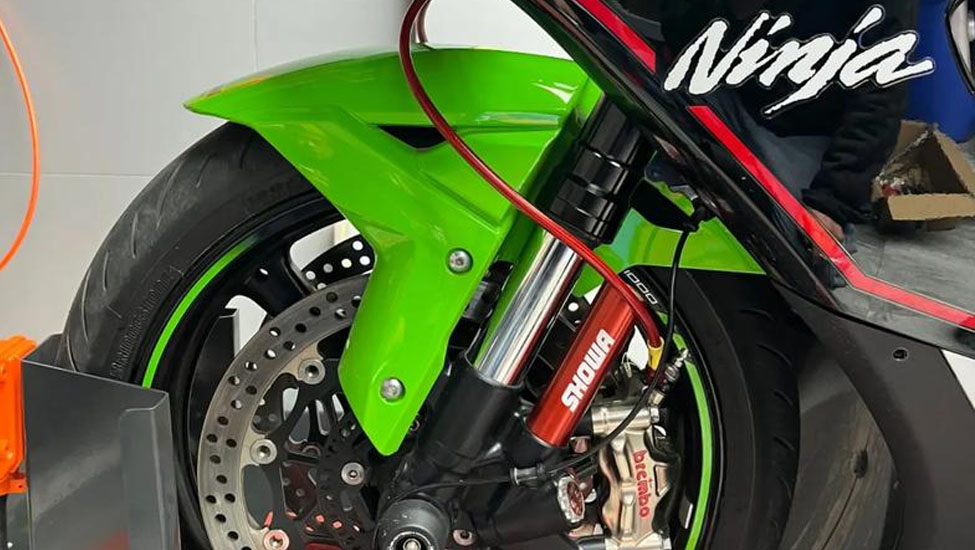
For example, changing the brake caliper or master cylinder can alter the position of the connection points. Changing handlebars or suspension components can also change the required hose length and routing.
Why Use a Customized Brake Hose?
- Correct application-specific length
- Suitable fitting angle
- Correct thread specification
- Better routing around modified components
- Choice of hose construction
- OEM or private-label production
Teflon Brake Line for Performance and Aftermarket Projects
Teflon or PTFE inner tubes are used in brake hose applications where material stability, chemical resistance and temperature performance are important considerations.
Our Teflon Brake Line products can be supplied for customized applications with different lengths and fitting configurations.
If you are developing a new product, send us your drawing, original hose or sample. We can discuss the required construction and fittings. Contact us for technical support.
PTFE Brake Line Assembly for Ready-to-Install Applications
A complete PTFE brake line assembly combines the hose with the required fittings. For OEM and aftermarket buyers, this can simplify installation and reduce the need to source individual components separately.
Our PTFE Brake Line Assembly can be customized according to customer drawings, samples and fitting requirements.
For a quotation, provide the hose length, fitting type, fitting angle, quantity and application. If some information is missing, send us your sample or photos and we can help identify the required specification. Contact us.
Nylon Brake Line and Nylon Brake Line Assembly
Nylon constructions can be selected for applications where flexibility, lightweight characteristics and specific environmental requirements are important.
Our Nylon Brake Line and Nylon Brake Line Assembly products are available for customized applications.
For importers and distributors, we can discuss specifications, colors, lengths, fittings, packaging and repeat production. Send us a drawing or sample if you want to develop a new specification. Contact our factory for a quotation.
Rubber Brake Line Assembly for Replacement Applications
Rubber brake hoses continue to be widely used in conventional vehicle brake systems. Their flexibility makes them suitable for many OEM replacement applications.
Our Rubber Brake Line Assembly products can be manufactured according to customer dimensions, fitting requirements and assembly specifications.
If you have an original hose but are unsure about the specification, send us photos or a sample. We can discuss the replacement configuration with you. Contact us for OEM and wholesale supply.
Stainless Steel Braided Hose and Braided Brake Lines
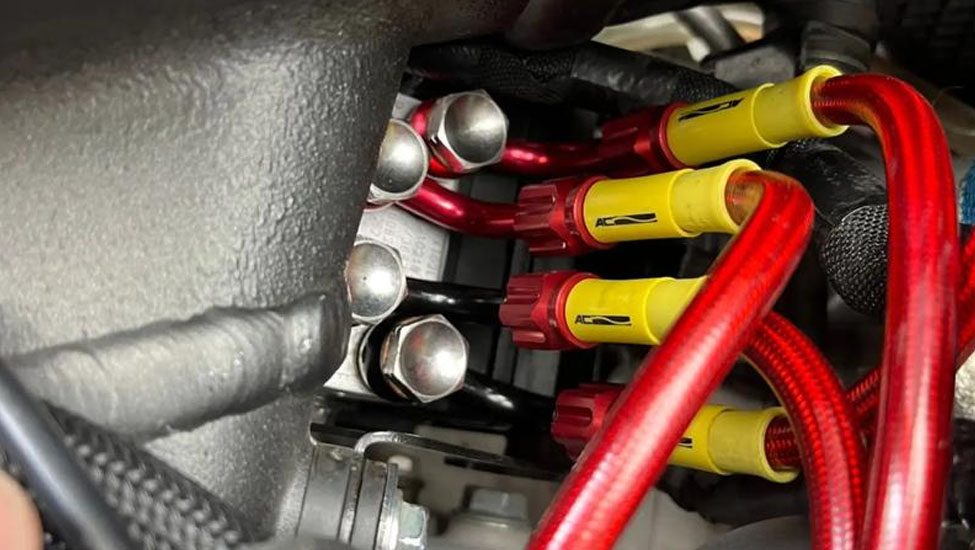
Stainless steel braided hose is widely used in aftermarket and performance brake applications. The braided reinforcement can help control radial expansion under hydraulic pressure compared with some conventional hose constructions.
This is one reason braided brake lines are often selected for modified motorcycles and performance vehicles where a more consistent brake lever or pedal feel is desired.
Important Point About Brake Performance
A braided hose does not automatically guarantee shorter stopping distances. Brake performance depends on the complete braking system, including the master cylinder, calipers, brake pads, discs, fluid, hose routing and installation.
How to Choose a Replacement Brake Hose
Check the Original Hose
Record the length, fittings, angles and routing of the original hose before ordering a replacement.
Check the Application
Provide the motorcycle, scooter, car or other vehicle application and explain whether the vehicle has been modified.
Check the Operating Environment
Consider heat, moisture, road dirt, vibration and mechanical movement when selecting the hose construction.
For Bulk Buyers, Check Consistency
Importers and distributors should confirm that future orders can maintain the same hose dimensions, fittings, crimping configuration and packaging.
Brake Hose Maintenance Tips
Inspect Before Problems Become Obvious
Regularly check the hose surface and fittings instead of waiting for a brake problem to occur.
Keep the Hose Away From Heat and Abrasion
Where possible, maintain suitable clearance from exhaust components, sharp edges and moving parts.
Check After Vehicle Modification
Whenever suspension, handlebars, brake calipers or master cylinders are changed, inspect the brake hose routing again.
FAQ: Brake Hose Failure
How often should brake hoses be replaced?
Replacement intervals vary by vehicle, material, environment and usage. Inspect the hose condition regularly and replace it if deterioration, leakage or structural damage is found.
Can a bulging brake hose be repaired?
A structurally damaged brake hose should generally be replaced with a correctly specified hose rather than repaired at the damaged section.
Does a modified brake hose really improve safety?
A correctly specified reinforced hose can reduce expansion under pressure compared with some conventional constructions and may improve consistency of brake control feel. Proper installation and complete system condition remain essential.
Can modified brake hoses be used on every motorcycle or car?
No. Hose length, fittings, thread specifications, routing and material compatibility must match the specific application.
Can you manufacture a brake hose according to an old sample?
Yes. Samples are commonly used as references for custom development. Drawings, dimensions and clear photos can also be provided.
Our Main Brake Hose Products
Our product range includes Teflon Brake Line, Nylon Brake Line, PTFE Brake Line Assembly, Nylon Brake Line Assembly and Rubber Brake Line Assembly.
We also provide stainless steel braided hose and braided brake lines for motorcycle and modified vehicle applications.
Send Us Your Brake Hose Sample or Drawing
If you are unsure about the cause of a brake hose problem or need a replacement/customized brake hose, send us the original sample, drawing, dimensions or photos.
We can review the hose structure and fitting requirements and discuss a suitable production solution.
Contact us for brake hose customization, OEM samples and bulk orders.