
How to Prevent Brake Hose Collapse: Material Selection, Installation and Maintenance Guide
Preventing brake hose collapse starts before the hose is installed. Material selection, reinforcement structure, hose length, fitting design and routing all influence the service condition of the finished brake line.
For OEM replacement, motorcycle modification, performance vehicles and aftermarket brake systems, selecting a brake hose based only on appearance or price can create unnecessary problems.
A properly specified hose should be matched to the brake fluid, pressure, temperature, vehicle configuration and actual installation environment.
1. Choose the Correct Inner Tube Material
The inner tube is the component that comes into direct contact with brake fluid. Its material should therefore be compatible with the specified brake fluid and operating conditions.
PTFE Inner Tube
PTFE is commonly selected for brake hose applications because of its chemical resistance and temperature characteristics.
For suitable applications, a PTFE inner tube combined with appropriate reinforcement can provide a stable hose construction.
Nylon Inner Tube
Nylon is another material used in brake line applications where flexibility, weight and installation requirements need to be considered.
The correct material should always be selected according to the actual brake system and application.
2. Select Suitable Reinforcement
The reinforcement layer helps the hose maintain its shape under hydraulic pressure and mechanical movement.
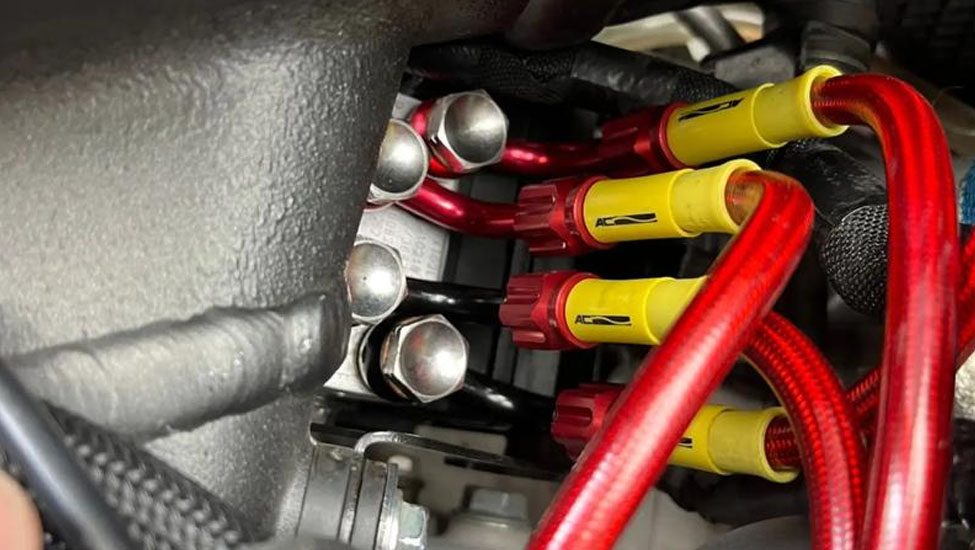
Stainless steel braided construction is commonly used in performance and modified brake hose applications.
Compared with an unreinforced flexible tube, a suitable braided construction can provide additional mechanical support and help control hose expansion under pressure.
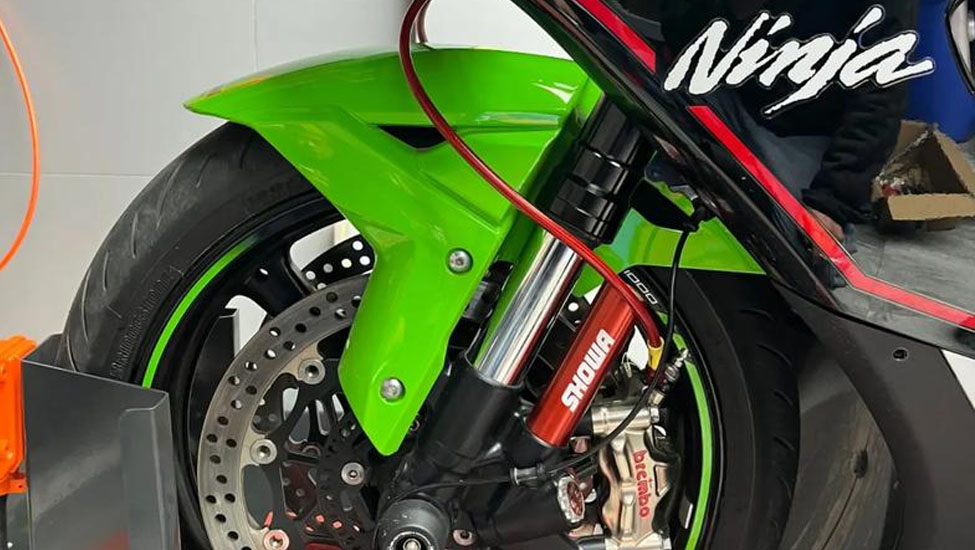
3. Avoid Excessive Bending
Even a high-quality brake hose can be damaged if it is installed with an excessively small bending radius.
Always allow the hose to form a smooth curve rather than forcing it into a sharp angle.
Check Steering Movement
For motorcycles and scooters, turn the handlebar fully from one side to the other and inspect the hose position.
Check Suspension Movement
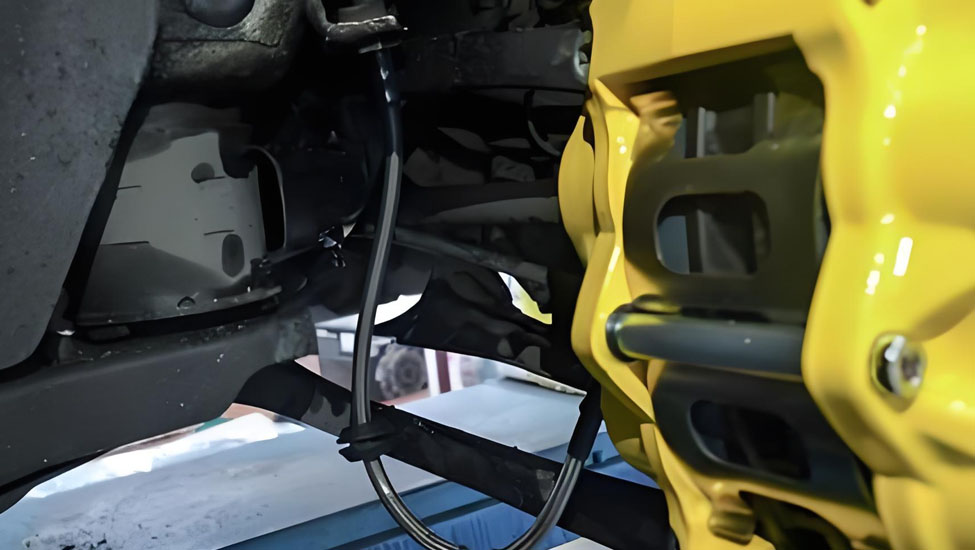
For cars, SUVs and motorcycles, check whether suspension movement causes the hose to become stretched, twisted or compressed.
4. Use the Correct Hose Length
Hose length should be based on the actual installation route.
A hose that is too short may be stretched during movement. A hose that is too long may create unnecessary loops and increase the possibility of rubbing against surrounding components.
For custom brake hose orders, providing an original sample or drawing is usually the most reliable way to confirm the finished length.
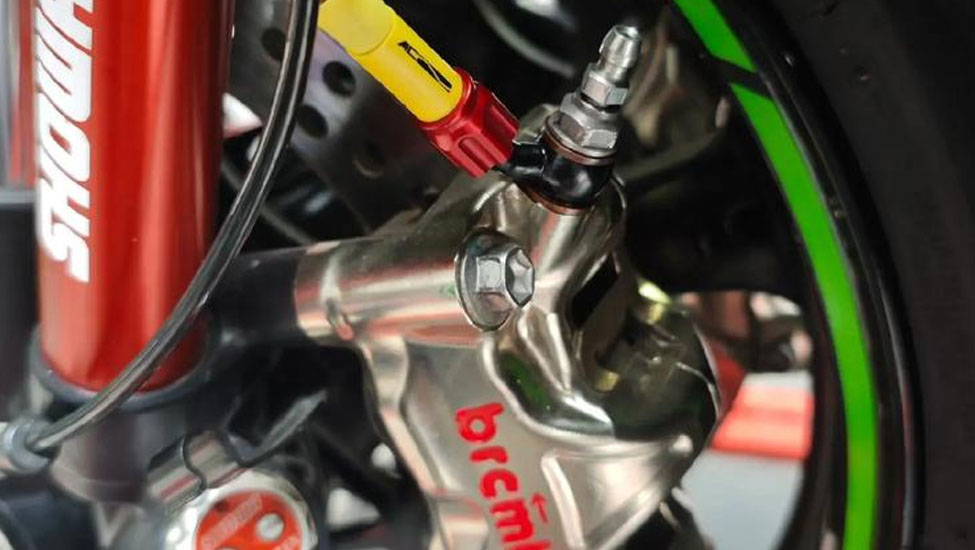
5. Pay Attention to Fitting Orientation
Fitting orientation is often overlooked when developing aftermarket brake hoses.
A correct hose length combined with an incorrect fitting angle can still produce twisting or sharp bending after installation.
For production orders, the fitting type, thread, angle and orientation should be confirmed before manufacturing.
Brake Hose Products for Different Applications
Teflon Brake Line
Our Teflon Brake Line is designed for customers looking for PTFE-based brake hose solutions with customized specifications.
It can be supplied according to required hose dimensions and assembly requirements.
Nylon Brake Line
Our Nylon Brake Line provides another option for applications where flexibility and installation characteristics are important.
Buyers can provide the required specifications, application information or existing sample for evaluation.
Nylon Brake Line Assembly
For customers requiring a finished hose assembly, our Nylon Brake Line Assembly can be produced with specified hose length and fittings.
Rubber Brake Line Assembly
Our Rubber Brake Line Assembly is available for conventional replacement and OEM-type applications.
What Makes a Good Custom Brake Hose?
A finished brake hose should not be judged by appearance alone. For professional buyers, the following specifications are important:
- Consistent inner tube material
- Correct reinforcement construction
- Suitable outer protection
- Correct hose length
- Correct fitting type
- Correct fitting thread
- Correct fitting angle
- Consistent crimping
- Suitable working pressure
- Appropriate temperature range
- Brake fluid compatibility
- Consistent production dimensions
Common Installation Mistakes That Can Cause Hose Problems
Forcing a Short Hose Into Position
Do not stretch a hose simply to make it reach the connection point. A slightly incorrect hose length should be corrected rather than compensated for through excessive tension.
Twisting the Hose During Installation
If the fitting orientation is incorrect, rotating the hose body to make it fit can create torsional stress.
Routing Too Close to Moving Components
The hose should have adequate clearance from wheels, brake discs, suspension components and sharp edges.
Ignoring the Bending Radius
A hose should follow a smooth curve. A sharp bend immediately next to the fitting is particularly undesirable.
Daily Brake Hose Maintenance
Brake hose inspection should be included in normal vehicle maintenance.
Look for:
- Cracking
- Swelling
- Flattening
- Sharp kinks
- Surface abrasion
- Corrosion around fittings
- Brake fluid leakage
- Abnormal hose movement
If a brake hose has been exposed to unusual heat, chemicals, road salt, mud or mechanical damage, inspect it more carefully.
When Should a Brake Hose Be Replaced?
Replacement depends on the manufacturer's maintenance schedule and the actual condition of the hose.
A hose should not be kept in service simply because there is no visible leakage. Cracking, swelling, severe abrasion, deformation or other deterioration are reasons to investigate replacement.
For modified vehicles, replacement may also be appropriate when the original hose no longer matches the new brake system configuration.
Are Braided Brake Lines Better for Modified Vehicles?
Braided brake lines can provide additional reinforcement around the inner tube and may help control hose expansion under hydraulic pressure.
For modified brake systems, they can also be produced with different lengths, fitting angles and connection configurations to suit the installation.
However, a braided hose is not automatically suitable simply because it is braided. The inner tube material, reinforcement, fittings, crimping, pressure requirements and installation must all be correct.
FAQ About Brake Hose Selection
How often should brake hoses be replaced?
There is no universal replacement interval. Follow the vehicle manufacturer's service recommendations and inspect the hose condition regularly. Replace damaged or deteriorated hoses rather than relying only on mileage or age.
Can upgraded brake hoses really improve safety?
A correctly specified upgraded hose can provide appropriate reinforcement and routing for a modified brake system. It may also provide more controlled hose expansion under pressure. However, brake safety depends on the complete system and correct installation.
Are aftermarket brake hoses suitable for every vehicle?
No. Brake hose specifications vary between vehicles and brake systems. The hose length, fitting type, thread, angle, brake fluid compatibility and routing must be confirmed before installation.
Our Main Brake Hose Product Range
We manufacture and supply different types of brake hose products for OEM and aftermarket applications, including:
- Teflon Brake Line
- Nylon Brake Line
- PTFE Brake Line Assembly
- Nylon Brake Line Assembly
- Rubber Brake Line Assembly
- Stainless steel braided hose
- Braided brake lines
- Motorcycle brake lines
Different hose lengths, fitting specifications, fitting angles, colors and assembly configurations can be developed according to customer requirements.
Send Us Your Drawing or Sample for Custom Brake Hose Development
If you are not sure which brake hose construction is suitable for your vehicle or project, send us your drawing, existing sample, installation photo or required product style.
Our engineering team can review the hose dimensions, fitting configuration, routing requirements and application conditions before production.
This is especially useful for importers, distributors, motorcycle parts suppliers, vehicle modification companies and OEM buyers who need repeatable specifications for bulk orders.
Contact our brake hose factory for technical support, sample development and custom quotation.