
How to Prevent Brake Hose Failure: Maintenance, Selection and Brake Line Upgrade Guide
Brake hose failure is not always caused by one single factor. Material aging, heat, repeated movement, incorrect routing, poor fitting selection and mechanical damage can all contribute to premature deterioration.
For motorcycles, scooters, cars and SUVs, proper brake hose selection and routine inspection can help reduce avoidable problems. For modified vehicles, the importance of correct hose length, fittings and routing becomes even greater.
Why Do Brake Hoses Fail?
Material Aging
Flexible brake hoses operate for long periods under pressure and repeated movement. Over time, the material may lose some of its original properties.
Heat Exposure
Brake components operate in an environment where temperatures can rise significantly. Repeated exposure to high temperatures can accelerate material aging if the hose construction is not suitable for the application.
Mechanical Abrasion
Continuous contact with a frame, fork, suspension component, wheel or sharp edge can gradually damage the outer surface.
Incorrect Routing
A hose that is too short can be pulled during steering or suspension movement. A hose that is excessively long may create loops that rub against surrounding components.
Incorrect Fittings
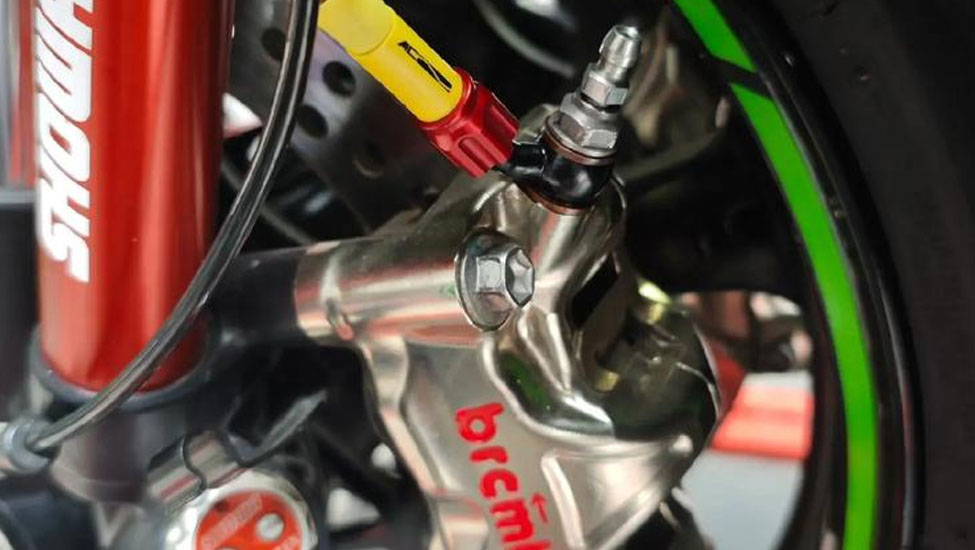
Using an unsuitable fitting angle or thread specification can create unnecessary stress at the hose connection.
Five Warning Signs of Brake Hose Failure
1. Cracks on the Outer Surface
Small cracks can indicate material deterioration, particularly when they appear around bends or fitting areas.
2. Visible Bulging
A swollen section may indicate structural deterioration and should be investigated.
3. Brake Fluid Leakage
Fluid around the hose, fitting or crimped section can indicate a sealing or hose problem.
4. Severe Abrasion
If the outer layer has been worn by repeated contact with another component, the hose should be inspected carefully.
5. Unusual Brake Behavior
A change in brake lever or pedal feel can have many causes, so it should not automatically be attributed to the hose. The complete brake system should be checked.
How to Maintain Motorcycle Brake Lines
Check the Hose During Routine Service
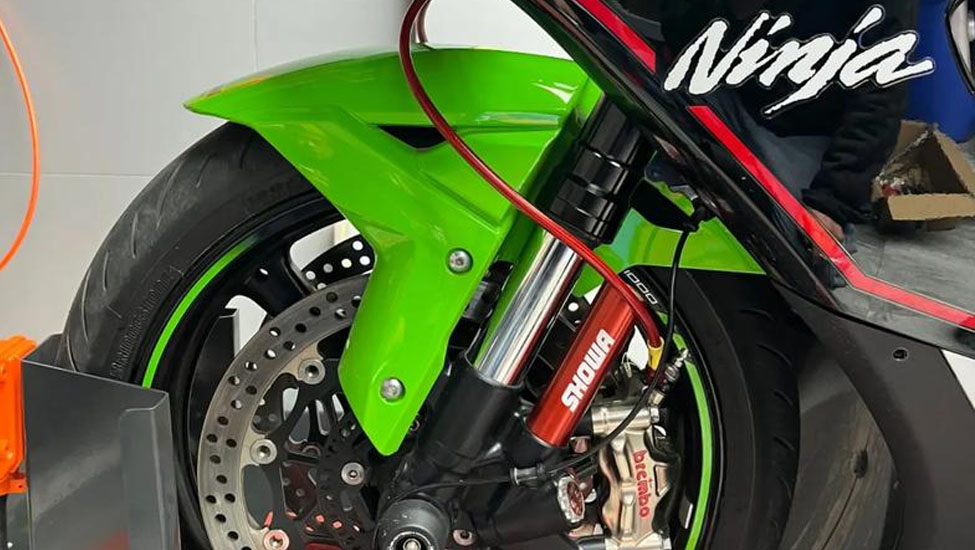
When servicing a motorcycle, inspect the brake hose along its entire route. Pay special attention to areas around the steering head, fork, caliper and master cylinder.
Check Full Steering Movement
Move the handlebar through the normal steering range and confirm that the hose does not become stretched, twisted or trapped.
Check Suspension Movement
Where applicable, inspect the hose during suspension movement and ensure that there is sufficient clearance from the wheel and other components.
How to Maintain Brake Lines on Cars and SUVs
Inspect Wheel-End Hoses
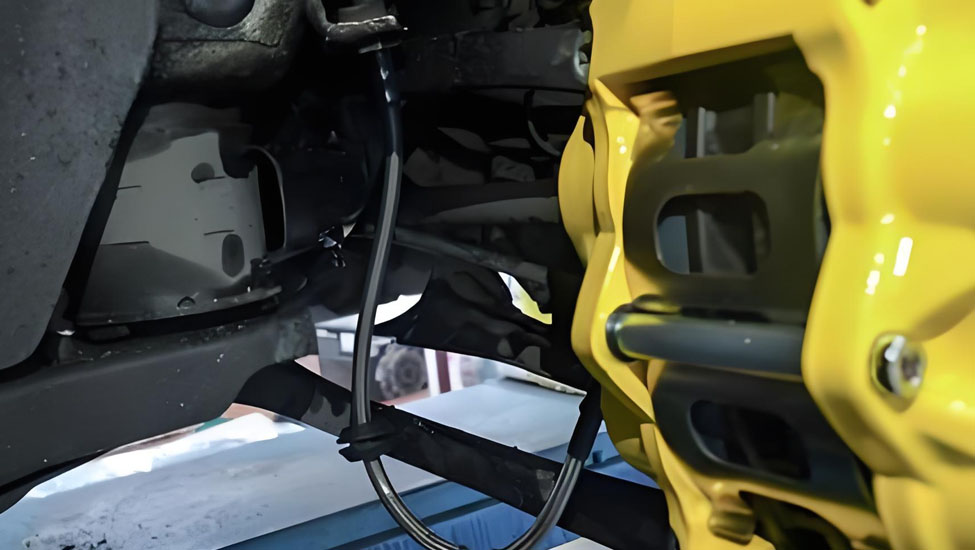
Flexible brake hoses near the wheels are exposed to road contamination, vibration, suspension movement and environmental conditions.
Check for Rubbing
Inspect the hose route around suspension components and brackets. Any continuous contact should be investigated.
Inspect Fittings and Crimped Areas
Connection areas should be checked for leakage, corrosion or visible damage during maintenance.
How to Choose a Better Brake Hose
Choose According to the Application
The correct hose should be selected according to the vehicle type, brake system and installation environment rather than simply choosing the most expensive construction.
Choose the Correct Length
Measure the actual installation route and consider steering and suspension movement.
Choose the Correct Fittings
Confirm the thread, pitch, banjo dimensions, angle and orientation before production.
Choose Suitable Materials
Rubber, nylon, PTFE and reinforced braided constructions each have different characteristics. Material selection should be based on the actual operating conditions.
Teflon Brake Line for Customized Applications
Teflon or PTFE-based brake hose constructions are used in applications where chemical resistance and temperature stability are important considerations.
Our Teflon Brake Line can be customized according to hose length, fitting configuration and customer requirements.
If you are developing a new brake line, send us your drawing, sample or specification. Our team can review the application and discuss the appropriate construction. Contact us for technical support.
Nylon Brake Line for Lightweight and Flexible Applications
Nylon brake line constructions may be selected for applications where flexibility, weight and material characteristics are important considerations.
Our Nylon Brake Line products can be produced according to different specifications and application requirements.
For importers and distributors, we can discuss hose dimensions, colors, lengths, packaging and repeat production. If you are unsure about the specification, send us a sample or drawing. Contact us for customization.
PTFE Brake Line Assembly for Modified Brake Systems
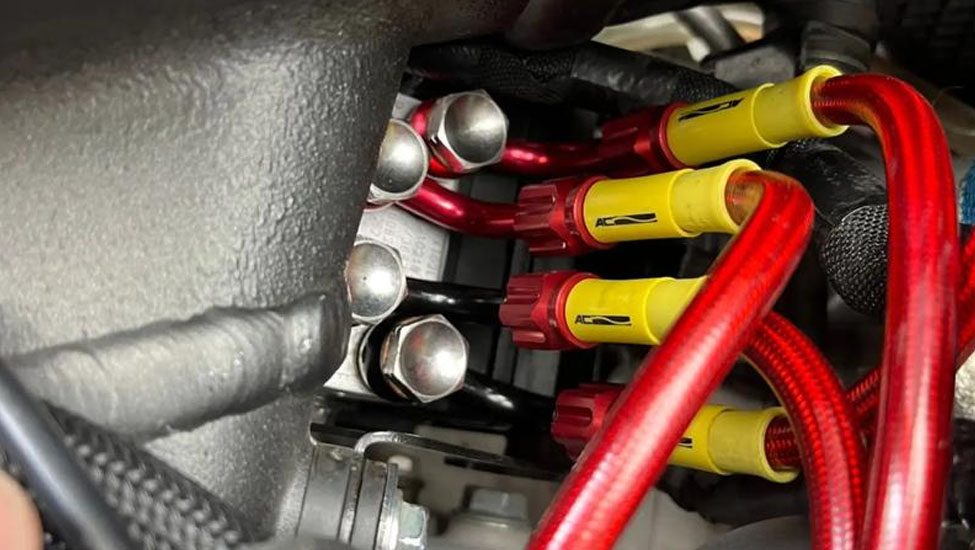
A complete brake line assembly includes the hose, fittings and connection configuration. This is particularly important for modified vehicles where the original brake hose may no longer fit the new brake components.
Our PTFE Brake Line Assembly can be manufactured according to drawings, samples and customized fitting requirements.
If you are developing an aftermarket brake assembly, provide the hose length, fitting information and application. A drawing or sample is even better. Contact us for sample development and bulk production.
Nylon Brake Line Assembly for OEM and Aftermarket Projects
For buyers who require a complete assembly rather than loose hose, the fitting configuration and crimping process are important parts of the final product.
Our Nylon Brake Line Assembly can be developed according to customer drawings, samples and dimensional requirements.
For repeat orders, we can discuss specification consistency, packaging and production requirements. Send us your existing assembly or drawing to begin the evaluation. Contact our factory for more information.
Rubber Brake Line Assembly for Conventional Brake Systems
Rubber brake hose assemblies remain an important option for conventional OEM replacement applications. Their flexibility and established construction make them suitable for many standard brake systems.
Our Rubber Brake Line Assembly can be manufactured according to required dimensions, fittings and assembly specifications.
For replacement projects, send us the original hose or photos of both ends. For wholesale projects, provide the required quantity and specification. Contact us for OEM and bulk supply.
Stainless Steel Braided Hose and Braided Brake Lines
For aftermarket and modified brake systems, stainless steel braided hose is a common choice because the braided reinforcement can help control radial expansion under hydraulic pressure compared with some conventional hose constructions.
Why Are Braided Brake Lines Popular in Modified Vehicles?
- Reinforced hose construction
- Reduced radial expansion compared with some conventional constructions
- Consistent brake control feel when correctly specified
- Suitable for many aftermarket applications
- Customizable hose lengths and fitting configurations
- Different appearance and finishing options
It is important to distinguish between improved brake feel and actual stopping distance. A braided hose may influence the feel and consistency of the hydraulic system, but braking distance depends on many other factors.
Brake Hose Selection Guide for Overseas Buyers
For Motorcycle Parts Importers
Provide motorcycle model information, hose length, fitting specifications and required quantity. If you are selling aftermarket products, also consider color, packaging and private-label requirements.
For Automotive Parts Distributors
Discuss OEM replacement specifications, repeat-order consistency, packaging and production capacity before establishing a long-term supply relationship.
For Modification Workshops
Provide the new brake system configuration rather than only the original vehicle model. Modified calipers, master cylinders and suspension components may change the required hose specification.
For Product Developers
A technical drawing or sample is the most efficient way to communicate a customized brake hose requirement. Important information includes hose length, fitting type, thread, angle, material and quantity.
Brake Hose Installation Tips
Do Not Twist the Hose
The hose should be installed in the intended orientation. Excessive twisting can create unnecessary stress.
Avoid Sharp Bends
Maintain a suitable bend radius according to the hose construction and manufacturer's specifications.
Keep Clearance From Moving Parts
Check the hose route through the full steering and suspension movement.
Check Connections After Installation
Follow the appropriate vehicle service procedure for fitting installation, sealing and brake system bleeding. If there is any sign of leakage or abnormal brake behavior, the system should be inspected before use.
FAQ About Brake Hose Maintenance and Upgrades
How often should brake hoses be replaced?
There is no universal replacement interval. Service life varies with material, vehicle usage, temperature, environmental exposure and installation. Regular inspection is recommended.
Do modified brake hoses really improve safety?
A properly designed reinforced brake hose can help reduce hose expansion under pressure and may provide a firmer or more consistent brake control feel. However, the complete braking system and correct installation determine the final result.
Are modified brake hoses suitable for all vehicles?
No. Brake hoses are application-specific. Length, fitting, thread, material, routing and brake fluid compatibility must be confirmed.
What should I provide when ordering a customized brake hose?
The most useful information includes a drawing, original sample, hose length, fitting photos, thread information, vehicle application and required quantity.
Can a factory produce small batches for aftermarket testing?
Production arrangements depend on the specific product and configuration. Sample development and small-batch requirements can be discussed before placing a larger order.
Our Main Brake Hose Product Range
Our main products include Teflon Brake Line, Nylon Brake Line, PTFE Brake Line Assembly, Nylon Brake Line Assembly and Rubber Brake Line Assembly.
We also manufacture and supply stainless steel braided hose and braided brake line solutions for motorcycle, scooter, automotive and modified vehicle applications.
Why Work With a Brake Hose Manufacturer?
For international buyers, working directly with a manufacturer can make it easier to communicate technical requirements, develop samples and maintain consistency across repeat orders.
Instead of ordering only by a generic product name, buyers can provide the actual application and technical requirements. This helps reduce problems caused by incorrect hose length, fittings or installation configuration.
Send Us Your Drawing or Sample
If you are developing a new brake hose or cannot identify the exact specification you need, send us your drawing, original hose, sample, dimensions or clear product photos.
Our team can review the application and discuss the appropriate hose construction, fittings and production requirements with you.
Contact us for customized brake lines, OEM development, samples and wholesale quotations.