
How Long Do Motorcycle Brake Hoses Last? A Practical Replacement Guide
Motorcycle brake hoses are often overlooked because they do not require the same level of regular attention as brake pads or brake discs. However, the hose is an important part of the hydraulic braking system, and its condition can directly affect brake system reliability.
So, how long does a motorcycle brake hose last?
There is no single replacement interval that applies to every motorcycle. Brake hose service life depends on hose material, manufacturing quality, temperature, UV exposure, humidity, road conditions, brake fluid, vehicle usage and installation quality.
For motorcycle owners, workshops and parts distributors, the better approach is to understand the signs of hose aging and inspect the hose according to its actual operating condition.
What Is the Typical Service Life of a Motorcycle Brake Hose?
A motorcycle brake hose can remain in service for several years when it is correctly specified, properly installed and used under normal conditions. However, age alone should not be the only factor used to decide whether a hose is still suitable.
Rubber hoses generally experience gradual aging as the material is exposed to heat, oxygen, moisture, UV radiation and repeated pressure cycles.
Reinforced aftermarket brake hoses can use different inner tube and reinforcement constructions, so their long-term performance depends on the actual material and manufacturing specification.
Why There Is No Universal Replacement Period
Two motorcycles of the same model may have very different brake hose service lives.
A motorcycle used every day in a hot and humid tropical environment may experience different aging conditions from a motorcycle used occasionally in a dry climate.
For this reason, inspection condition and manufacturer recommendations should be considered together rather than relying on a fixed number of years.
What Causes Motorcycle Brake Hose Aging?
Heat and Temperature Cycling
Brake hoses are exposed to temperature changes during normal riding. Repeated heating and cooling can gradually affect hose materials and protective layers.
High-performance motorcycles, motorcycles used in heavy traffic and vehicles operated in hot climates may experience more demanding conditions.
UV Exposure
Long-term sunlight exposure can accelerate aging of certain rubber and polymer materials, particularly when the outer protective layer is damaged or unsuitable for the environment.
Moisture and Humidity
Humidity, rainwater and road contamination can contribute to corrosion around fittings and other exposed components.
This is particularly relevant for motorcycles operated in coastal areas or tropical climates.
Mechanical Abrasion
A brake hose can deteriorate faster when it repeatedly rubs against the fork, frame, wheel, brake disc, suspension components or other parts.
Incorrect routing is one of the problems that should be checked after installation.
Signs That a Motorcycle Brake Hose May Need Replacement
Visual inspection is an important part of brake system maintenance.
- Visible cracks in the outer surface
- Abnormal swelling or bulging
- Brake fluid leakage
- Severe abrasion
- Damaged reinforcement
- Corroded or damaged fittings
- Hose deformation
- Hose twisting or incorrect routing
Brake Hose Swelling
Unusual swelling under pressure should not be ignored. A hose that has developed abnormal deformation may no longer have the same mechanical characteristics as when it was new.
Brake Fluid Leakage
Any brake fluid leakage around the hose or fittings requires immediate attention. The braking system should be inspected before the motorcycle is returned to normal use.
Soft or Inconsistent Brake Feel
A soft brake lever can have many causes, including air in the hydraulic system, old brake fluid, worn components, caliper problems or hose-related issues.
Therefore, a soft lever should not automatically be blamed on the brake hose. The complete braking system needs to be checked.
Does Upgrading to a Braided Brake Hose Increase Service Life?
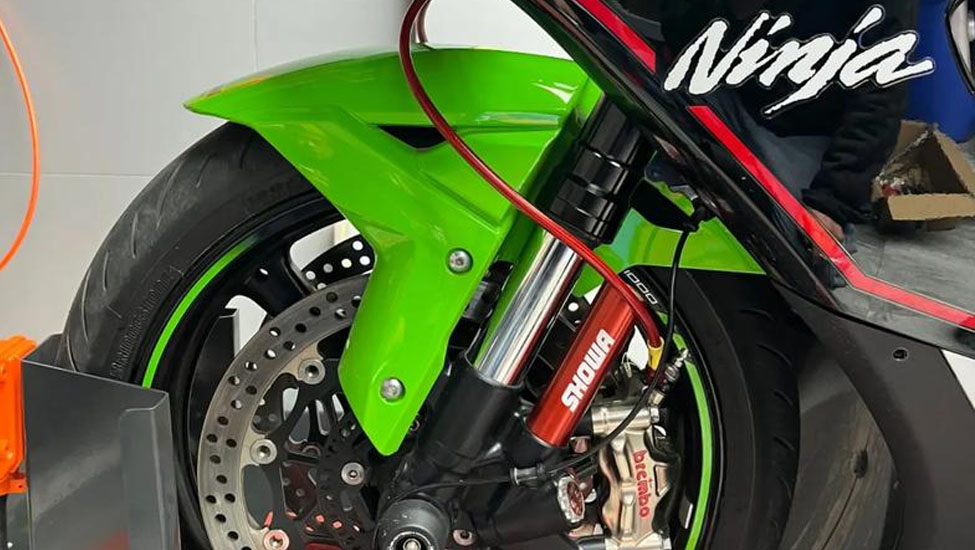
Many motorcycle owners choose reinforced aftermarket brake hoses because of their mechanical characteristics and more stable construction.
A correctly designed reinforced hose can help control expansion under hydraulic pressure and provide consistent brake lever response.
However, a braided brake hose is not maintenance-free. The hose, fittings and protective covering still need to be inspected regularly.
Stainless Steel Reinforcement
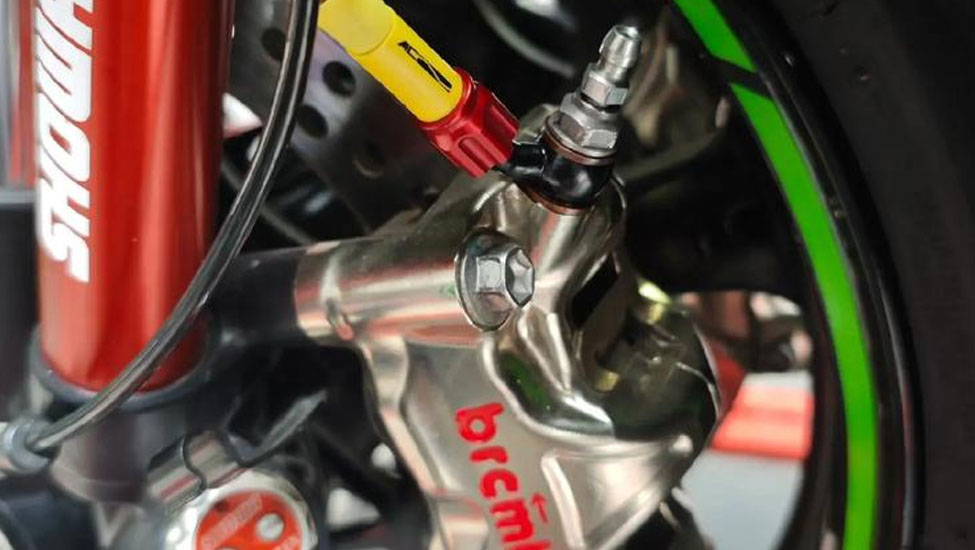
Stainless steel reinforcement is commonly used in performance-oriented brake hose construction because it provides mechanical reinforcement around the inner hose.
Our Teflon Brake Line is one option for customers looking for a reinforced brake line construction for motorcycle and aftermarket applications.
Need a different hose length, fitting or configuration? Send us your original hose, drawing or sample. We can review the basic specifications before production.
Contact Us for Custom Motorcycle Brake Lines
Rubber vs Teflon Motorcycle Brake Lines
Rubber brake hoses remain widely used because they are flexible, economical and suitable for many original equipment applications.
For replacement projects, our Rubber Brake Line Assembly can be produced according to the required hose and fitting configuration.
For performance and modified applications, a Teflon-based hose with suitable reinforcement may be selected where the application requires a different construction.
What Should Buyers Compare?
- Inner tube material
- Reinforcement structure
- Hose pressure requirements
- Temperature resistance
- Fitting material
- Fitting angle
- Hose length
- Outer protection
How to Extend Motorcycle Brake Hose Service Life
Keep the Hose Away From Moving Parts
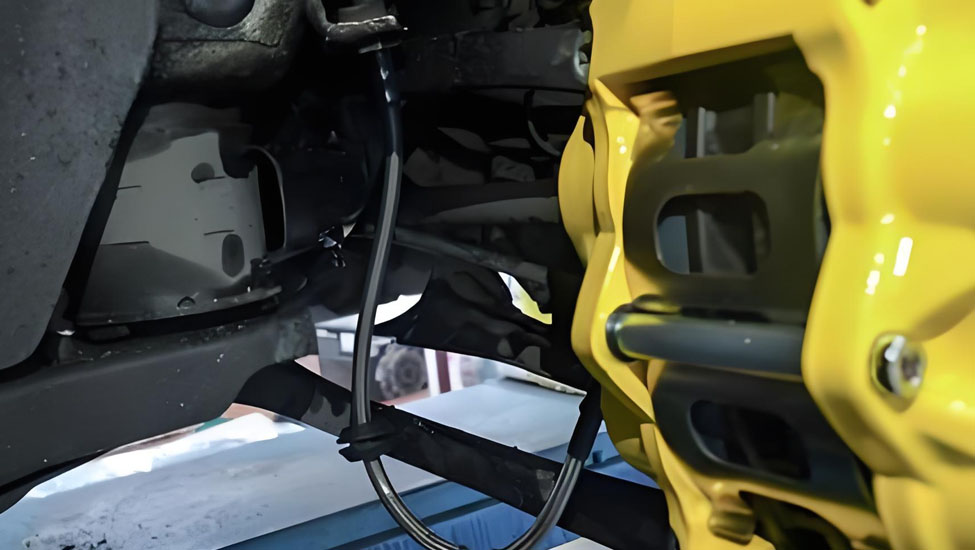
The hose should not rub against the wheel, tyre, brake disc, fork or other moving components.
Avoid Sharp Bends
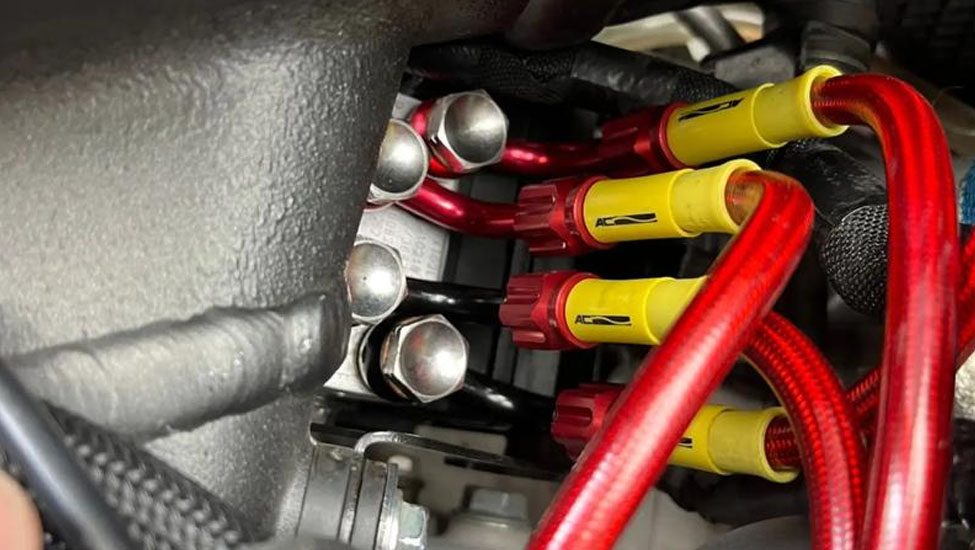
Brake hose routing should follow a smooth path without unnecessary sharp bends or twisting.
Inspect After Motorcycle Modifications
Changing handlebars, forks, calipers or suspension components can change the original brake hose routing.
Always inspect the hose after modification.
Keep Fittings Clean
Dirt and corrosion around fittings should be checked during routine brake maintenance.
When Should a Motorcycle Brake Hose Be Replaced?
Replacement should be considered when the hose reaches the end of its recommended service period, shows visible deterioration, suffers mechanical damage or no longer meets the vehicle manufacturer's requirements.
For older motorcycles, replacing aged hoses as part of a complete brake system inspection can be a practical maintenance decision.
Custom Motorcycle Brake Hose Manufacturing
Our factory supplies customized brake hose solutions for motorcycle and aftermarket applications.
Depending on the project, we can discuss hose material, reinforcement, length, fitting type, fitting angle, outer protection and assembly requirements.
Our product range includes Nylon Brake Line, PTFE Brake Line Assembly and other customized brake hose assemblies.
If you are unsure about the correct hose material or fitting configuration, send us a drawing, sample or clear photos. Our technical team can check the basic requirements with you.
FAQ: Motorcycle Brake Hose Service Life
How often should motorcycle brake hoses be replaced?
There is no universal replacement interval for every motorcycle. Follow the vehicle manufacturer's service recommendations and inspect the hose regularly for aging, leakage, swelling, cracking or damage.
How long does a rubber motorcycle brake hose last?
Service life varies according to material quality, age, temperature, UV exposure, brake fluid and operating conditions. The physical condition of the hose is more useful than a fixed age alone.
Do braided brake hoses last longer than rubber hoses?
Service life depends on the complete hose construction and operating environment. A properly manufactured reinforced hose can provide good mechanical durability, but it still requires regular inspection.
Does replacing the brake hose improve braking performance?
If the original hose is aged, damaged or expanding abnormally, replacement can restore the intended hydraulic response. A properly designed reinforced hose may also provide a firmer and more consistent lever feel.
Can the same brake hose be used on every motorcycle?
No. Hose length, fitting type, thread specification, fitting angle and routing must be matched to the specific motorcycle and braking system.