Do I need to bleed air when replacing brake lines?
2026-1-5
Comments
I. First, the answer: You must bleed the air from the brake lines before replacing them!Whether you're doing a DIY replacement or going to a repair shop, bleeding the air is the "final and crucial step" after replacing brake lines—skipping this step could lead to brake failure, making driving on the road a gamble with your safety. Many new drivers think, "Just replace the lines and add brake fluid," but this is a complete misconception. Today, we'll explain this thoroughly.
II. Why is bleeding the air so necessary? The principle is super simple.The braking system works using "hydraulic transmission": When you press the brake pedal, the pressure of the brake fluid pushes the brake pads to clamp the brake disc, causing the car to slow down. Air is compressible, and if it gets into the brake lines, two fatal problems will occur:
1. Soft brake pedal: The brake pedal feels hollow, requiring a deep press to achieve braking effect, making it ineffective in emergencies;
2. Insufficient braking force: Compressed air consumes some hydraulic pressure, preventing the brake pads from fully engaging even when the pedal is fully depressed, significantly increasing braking distance;
3. Accelerated brake fluid deterioration: Moisture from the air mixes with the brake fluid, lowering its boiling point, corroding the brake lines and calipers, and eventually causing leaks.
In short: The brake system can only contain brake fluid, not air. When replacing brake lines, the lines are disconnected, inevitably allowing air into the system. Therefore, bleeding the air is mandatory, not optional.
III. Consequences of not bleeding the air? More Dangerous Than You ThinkDon't take a "good enough" approach and drive without bleeding the brake fluid. You might encounter these problems:
Daily Driving: Slower brake response, requiring you to maintain a greater following distance, increasing the risk of rear-end collisions in city traffic;
Emergency Situations: You might accidentally press the brake pedal, causing the car to lurch forward uncontrollably, especially in rain or on highways, with potentially disastrous consequences;
Long-Term Damage: Excessive water content in the brake fluid can cause it to freeze and clog the brake lines in winter, and in summer, the high temperatures can cause the brake fluid to boil and create vapor lock, leading to complete brake failure.
I've seen too many DIY enthusiasts skip the air bleeding step, only to have to turn back and redo it after less than 5 kilometers. Some have even caused minor accidents due to this oversight—it's truly not worth it.
IV. Replacing the Brake Lines Yourself? 3 Methods for Bleeding Air (First Method is Best for Beginners) You don't need a professional to bleed air; you can do it yourself with simple tools. The key is to "expel the air from the brake lines along with the brake fluid." Here are 3 practical methods:
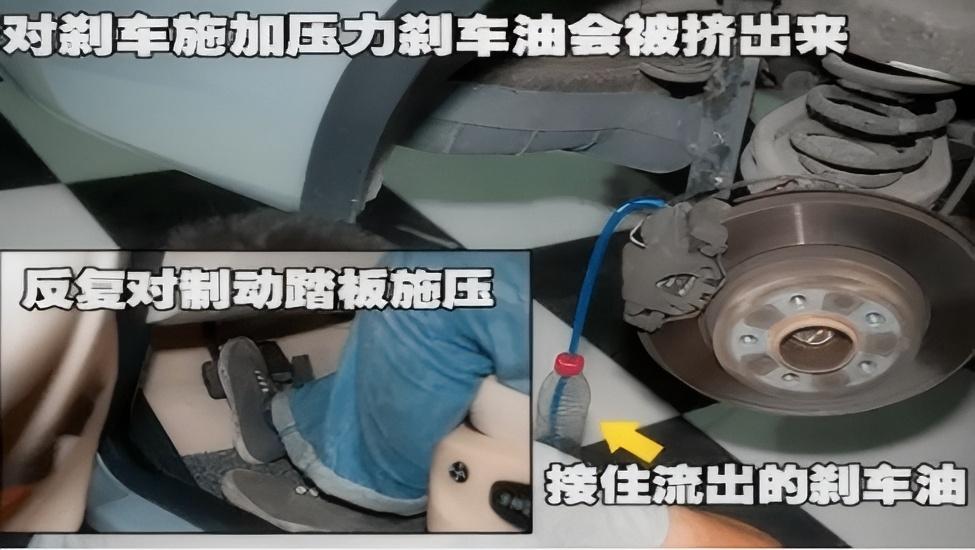
1. Two-Person Method (Easiest to Operate, First Choice for Beginners)Tools: Brake fluid, wrench, transparent hose, brake fluid receiver, gloves (brake fluid is highly corrosive)
Steps:
(1)Fill the brake fluid reservoir with new brake fluid, but don't overfill (to prevent overflow and corrosion of the paint);
(2) Have a friend sit in the driver's seat and tell you to "press the brake," "hold," and "release," ensuring the brake fluid reservoir doesn't empty;
(3) Locate the bleed screw on the brake caliper (or brake master cylinder) of the wheel whose air needs to be bled. Attach the transparent hose to it, and place the other end into the brake fluid receiver;
(4) Loosen the bleed screw 1/4 full with a wrench. 1. Have a friend press and hold the brake pedal. You'll see brake fluid with air bubbles flowing from the hose.
(5) After the bubbles disappear, tighten the bleed screw, then have your friend release the brake.
(6) Repeat steps 4-5 until the brake fluid is completely free of air bubbles, then refill the brake fluid tank.
• Sequence: Usually start with the wheel furthest from the master cylinder (e.g., front-wheel drive: right rear → left rear → right front → left front). Refer to your vehicle's manual for specific instructions.
2. Vacuum Bleeding Method (Can be done alone, requires specialized tools)
• Tools: Vacuum pump (available online for a few tens of yuan), brake fluid, wrench, brake fluid container
• Steps:
(1) Fill the brake fluid tank, attach the transparent hose and brake fluid container.
(2) Use the vacuum pump to create a vacuum in the hose, loosen the bleed screw until the flowing fluid is free of air bubbles.
(3) Tighten the screw, refill the brake fluid tank. This method is easier than using two people and is suitable for solo users or those without assistance.
3. Gravity Bleeding Method (Slowest but most stable, suitable for older cars)
Tools: Brake fluid, wrench, hose, fluid connector
Steps:
(1) Add enough brake fluid, attach the hose and fluid connector;
(2) Loosen the bleed screw, allowing the brake fluid to flow out naturally by gravity, continuously adding brake fluid during the process;
(3) Observe the hose until no more air bubbles flow out, then tighten the screw;
Disadvantages:Time-consuming (may take 10-15 minutes per wheel), but suitable for older cars with aging brake systems or where excessive pressure could damage parts.
V. Common Misconceptions about Bleeding Air, Avoid These Pitfalls!1. Only bleeding the newly replaced brake line? Wrong! Replacing a single brake line can allow air into the entire brake system; all wheels must be bled in sequence;
2. Mixing brake fluids? Wrong! Different types of brake fluid (e.g., DOT3 and DOT4) cannot be mixed, as this will cause the brake fluid to deteriorate. Check the original vehicle manual before bleeding to select the correct type;
3. Not checking after bleeding? Wrong! After bleeding the air, be sure to pump the brakes a few times to feel the pedal firmness: Normally, it should feel firm and not soft or wobbly. If it still feels soft, it means there's still air left.
4. Overfilling the brake fluid reservoir? Wrong! Overflowing brake fluid will corrode the paint. After bleeding, only fill to the "MAX" mark on the reservoir.
VI. Final Summary: Don't Skip the Air Bleeding Step!The core of replacing brake lines is "restoring the hydraulic transmission of the braking system," and bleeding air is crucial to ensuring that the hydraulic system isn't interfered with by air. Whether you're a professional mechanic or doing it yourself, this step is essential—spending 10-20 minutes bleeding air ensures absolute safety while driving.
If you're unsure about doing it yourself, getting your brakes bled at a repair shop won't cost much, but make sure the mechanic "bleeds all wheels in the correct order." Don't let them do a perfunctory job. After all, every detail of the braking system is related to your and your family's safety!